

Knowledge Panel
A Knowledge Panel is an automated information box that Google displays alongside search results when a user searches for a recognized entity: a company, a person, an organization, or a notable topic. Google builds it from its Knowledge Graph, a structured internal database of entities and their relationships, rather than from a single web page.
Knowledge Panel vs. Google Business Profile
Two terms that appear in the same conversation yet describe different things:
- Google Business Profile is a tool you actively manage. You create and update it, and it controls how your business appears in Google Maps and local search. Parts of its data can feed into a panel, but the two features serve different purposes and operate independently.
- Featured Snippet is a formatted excerpt from a single web page, pulled above organic results for specific queries. It is page-based, not entity-based: it changes or disappears when the underlying page changes.
A Knowledge Panel belongs to the entity. Google decides to generate one when it has enough confidence that an entity is notable and its facts are consistent across sources. Once a panel exists, a verified representative can claim it and suggest edits, but the panel itself is Google's view of the entity, not a managed listing you build from scratch.
Example: A consulting firm searches its own name and finds a Knowledge Panel on the right side of the SERP showing the company logo, industry category, official website link, and a description assembled from Wikipedia and the firm's own structured data. The marketing team did not create this panel; they shaped it by keeping their Organization schema markup accurate and maintaining a consistent Wikipedia entry for the company.

Where Google Gets the Data
Google populates Knowledge Panels from several categories of source:
- Open reference databases: Wikipedia and Wikidata are primary inputs. Consistent, accurate entries there are among the clearest signals Google uses to confirm an entity's existence and key facts.
- Licensed data: Google partners with authoritative third-party providers for specific entity types, including companies, public figures, and products.
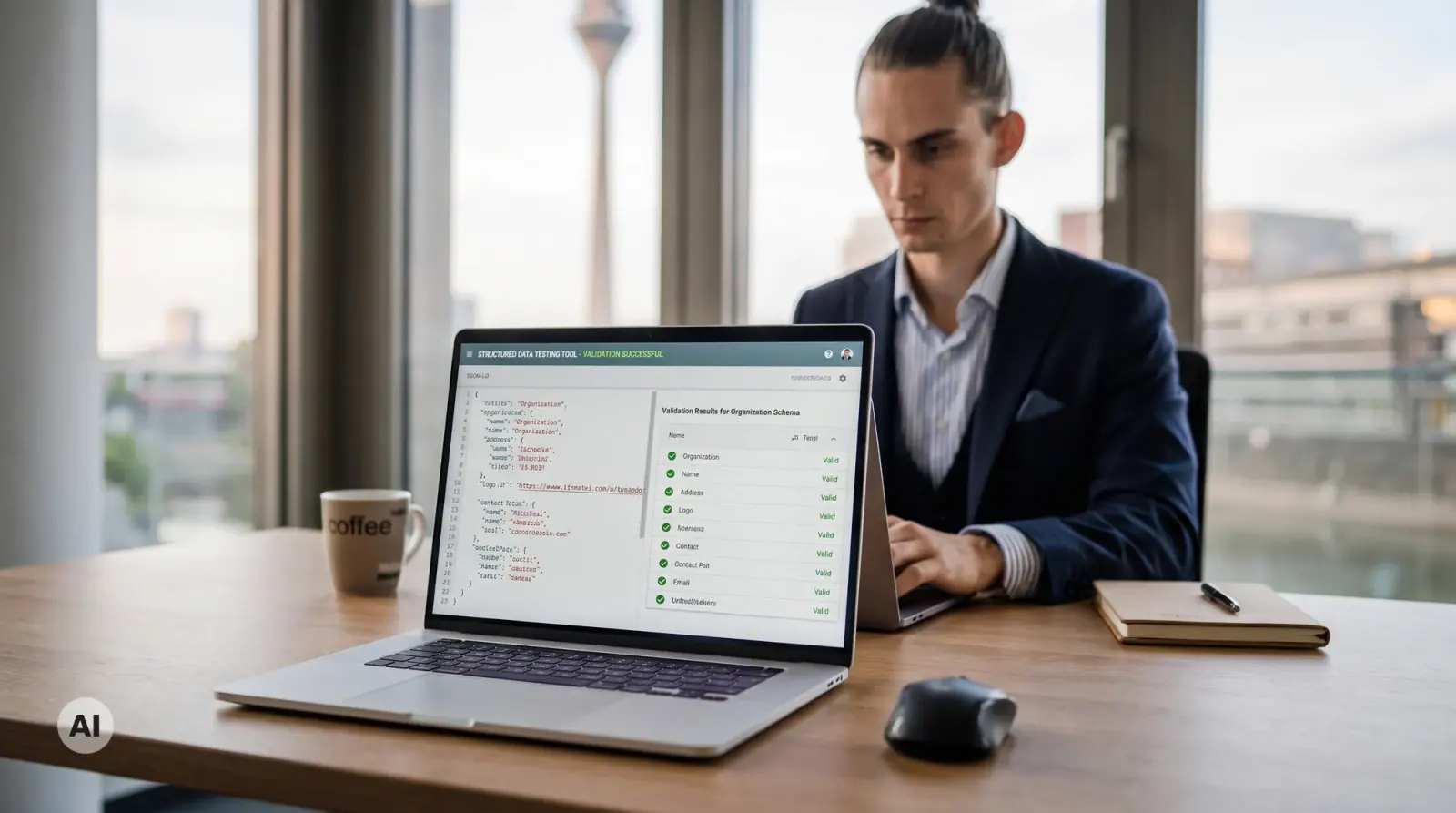
- Structured data on official websites: Schema.org markup for Organization, Person, or LocalBusiness gives Google machine-readable confirmation of core attributes: official name, founding date, website URL, social profile links.
- Consistent cross-web signals: Mentions in press coverage, industry directories, and verified social profiles reinforce the entity model when they describe the entity the same way.
The consistency of these signals matters as much as their presence. If a company's name appears in three slightly different forms across its website, Wikipedia entry, and Google Business Profile, the entity model stays uncertain, and the panel may not appear or may show incomplete information. The same entity signals that build a Knowledge Panel are the foundation for how AI systems like ChatGPT cite and recommend brands in generative answers.
Claiming Your Panel
If Google has already generated a Knowledge Panel for your brand or name, an official representative can claim it. Verification works through a Google account that Google can associate with the entity: a verified account linked to a YouTube channel, a Search Console property for the official domain, or a verified official social account.
After claiming, you can suggest changes to the description, propose updated images, and manage featured links. Google reviews all suggestions before publishing them. Claiming does not guarantee that your proposed edits will appear, but it opens the official channel for corrections and gives the entity representative a recognized voice in the process. Keeping the entity layer consistent is part of a coherent approach to search engine optimization.
Why It Matters
A Knowledge Panel signals that Google has recognized your brand or identity as an established entity in its Knowledge Graph. That recognition carries beyond the traditional search result page. Entity data from the Knowledge Graph feeds semantic search systems that match queries to entities rather than to keywords, and it informs the citations that AI-generated answers surface when users ask about companies or individuals.
For organizations building their digital authority, a confirmed Knowledge Panel is a concrete indicator that the entity layer is in place. It also makes a brand more resilient to third-party misinformation: once you have claimed a panel, you have a direct mechanism to flag and correct inaccurate data in Google's view of your entity.

Christian Kallinich
Christian is the founder and managing director of marketer UX. As an expert in branding, design and web development, he regularly publishes new articles and videos to make these topics accessible to anyone who wants to impress with their brand.
Tailored solutions
Discover selected topics and services related to web design, Webflow, and lead generation. Quickly find the right starting point for your next project.
Articles & Resources

Google Core Update: How to Identify the Impact and Respond the Right Way

Marketing Attribution Models: Which Channel Really Brought the Lead?

Core Web Vitals: How to Improve LCP, INP, and CLS in Practice

Offline-Conversions und erweiterte Conversions: Google Ads mit echten Abschlüssen füttern
B2B Google Ads: The Most Common Mistakes and How to Stop Wasting Budget

Weglot and PHP2Shell: What Weglot Users Need to Check Now
Webflow and PHP2Shell: Why Webflow Websites Are Not Affected

PHP Security Vulnerability PHP2Shell: Why Hundreds of Websites Went Offline
SEO Freelancer or SEO Agency: Which One Fits Your Business?
AI SEO: What Really Changes With AI-Powered Search

Full Self-Driving as a team event: What Tesla’s AI teaches us about trust and innovation
How Long Does SEO Take? Realistic Timelines and What to Expect

Online Advertising: Channels, Costs and First Steps (2026 Overview)

Optimize Your Landing Page: More Enquiries from the Same Traffic
On-Page SEO: The Complete Guide to On-Page Optimization (with Checklist)

Integrating a CRM into your website - how it generates leads

Webflow websites for companies: Is it worth it in 2026?

How does a website win new customers?

Webflow CRM Integration: How We Connected Webflow with Microsoft Dynamics 365

SEO: What is Search Engine Optimization and How Does It Work?
Google Ads Transparency Center
Framer vs. Webflow 2026: Which Website Builder Wins the Duel?

Typography in UI/UX Design: More Than Just Pretty Type

UI/UX Trends 2025: What Companies Need to Know Now to Stay Relevant

From WordPress to Webflow — How ACO left its “update hell” and became a premium brand

The future is now: What the Webflow Conference 2025 really means for marketers
Game changer: Webflow real-time collaboration is here — and it's changing everything

Google Disables #num=100: What the Change Means for SEO, Rank Tracking & Tools

llms.txt: Why this small file determines your future visibility on Google & Co.
Build a website with AI
Webflow agency: Why the right partnership is decisive for your digital success

Building an online shop: From retail store to online shop — your practical guide for a successful start

Webflow & llms.txt: Our practice test shows what it really does

Webflow SEO optimization: 15 advanced strategies for maximum visibility
Barrier-free & GDPR-compliant: How iubenda supports companies in implementing ASA

Webflow vs. Storyblok: 10× SEO boost for SMEs

Accessibility Strengthening Act 2025: The new obligation for digital accessibility

Monitored and exploited: The shocking truth behind your online behavior!

Why no one has come up with the idea yet: The turbo trick with Google ads!

Success with Webflow: relounge.club & marketer UX

Expert explains: How much does advertising cost on Google? Sample calculation & analysis

Search engine optimization (SEO): At the top of Google in just 3 months

Is a blog still worthwhile in 2024?

Have a website created: How to find the perfect partner

NIO Marketing: How to achieve real customer loyalty through innovative strategies

Webflow Intellimize: AI-powered website optimization possible soon!

Google Seo Leak: Anyone can get to number 1!

Marketing psychology: Tesla website analysis

Latest Webflow Features and Updates 2024

The 10 most expensive domain names in the world

Local SEO: The ultimate tips to attract local customers

The power of color psychology in marketing and branding

Tesla's 2024 entry into paid advertising: First visible steps revealed

Webflow vs. WordPress 2026: The Ultimate Comparison

Tesla's new marketing strategy 2023

Chat GPT Revolution - How do you use it correctly?

Website Creation Cost: What to Budget Realistically in 2025/2026

Advertising on the Internet - Boost Your Business Potential Online
SEO Consulting: Process, Costs, and How to Choose the Right Advisor

How Klaus Hübner boosts his company's growth with online marketing

Top 10 Webflow features we've loved as an agency since 2017

Online marketing strategy: Achieving your goal in 6 steps

Marketing law firm: How to attract clients

What is a lead

Learn how to sell

B2B online marketing - That's how it works in business!

Redesign of the company website

Winning customers in the digital age
