

AI SEO: What Really Changes With AI-Powered Search
This article grew out of an expert interview I gave for a master's thesis on content strategies and AI search. The central question was direct: what actually changes for SEO when buyers increasingly use AI tools instead of typing queries into a traditional search engine? My answer was shorter than most people expected. Less changes than the current industry narrative suggests.
AI Search Works Like a Bot That Googles For Your Buyers
When someone opens ChatGPT, uses Perplexity, or reads a Google AI Overview to find a supplier or service, what actually happens technically? A system searches on their behalf. It pulls from sources Google already ranks, reads review portals, scans well-cited reference pages, weighs positive customer quotes against neutral or negative ones, and assembles a summary. The AI is doing the searching; your potential buyer reads the result.
The circular reality here is important: the AI mostly reads what Google already trusts. That means your Google presence, your off-site reputation, and the relevance of your content remain the primary inputs. What shifts is that more of the buying journey now happens before the first click, not that a fundamentally different set of signals governs who gets cited. AI search shifts the economics of ranking at position 1, because an AI-generated answer can absorb a query entirely without returning a click to anyone.
From what I observe across client engagements: nearly every buyer interacts with an AI assistant at some point between recognising a problem and contacting a supplier. That moment may not be the decisive one in their journey, but it consistently shapes the shortlist.
Your Content Fundamentals Do Not Need to Be Rebuilt
The content rules have not been rewritten. The mechanics of what makes content rankable, and now citable by AI search engines, follow the same logic that has guided solid SEO for years.
Start with the user's actual question. Put the direct answer in the first sentence or paragraph. Add the supporting context below it. This structure serves both traditional search algorithms and AI retrieval systems; both scan for the clearest, most direct answer to a query. Build a glossary where each term has its own dedicated page rather than a single long reference document. Build FAQ content from the phrases people actually type, not from the polished internal language of product pages.
What has become more visible is the importance of backing every claim. Your own project data, real case outcomes, and specific named references signal to an AI that your content is grounded rather than generic. Off-site presence matters more explicitly now: mentions on review portals, citations in trade publications, substantive video content. These were always ranking signals; the difference is that AI systems now read them and summarise them directly to buyers before the buyer visits your site. For the practical playbook on earning citations in AI-generated answers, the guide on how to become visible in ChatGPT, Perplexity, and Google's AI Overviews covers the steps for each channel.

Technical SEO for AI: Solid Craft Over Exotic Fixes
The technical requirements for AI SEO are less exotic than most posts suggest. What matters is the foundation that has always determined whether a crawler can read and understand a site: pages load quickly, the main content lives in the HTML rather than being rendered by JavaScript after the initial load, and the structure is logical with one clear argument per URL.
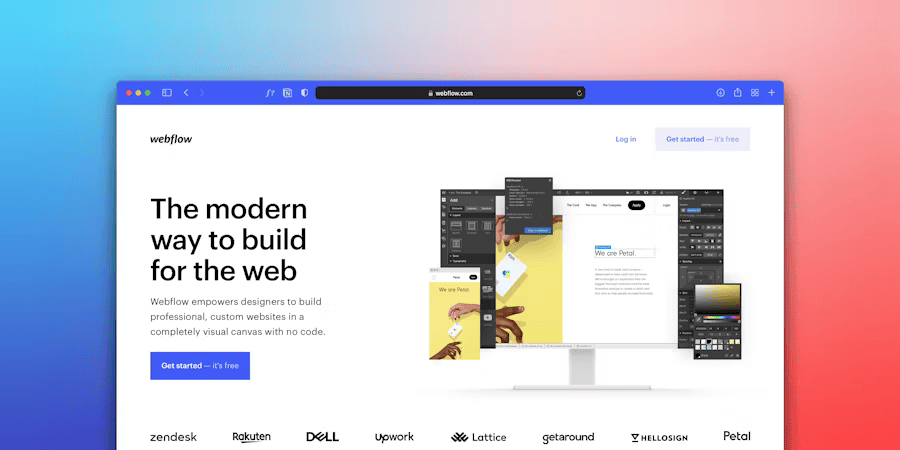
We build almost all our client sites in Webflow, which handles the fundamentals well when templates are set up correctly. One check worth running this week: open your robots.txt file and confirm you are not blocking AI crawlers. GPTBot, Perplexitybot, and similar user agents need access to read your content. Blocking them has no competitive advantage, and the cost in reduced AI visibility is real.
We apply structured data consistently across every site: FAQ schema, Organization schema, Article schema, and JobPosting where relevant. Whether AI systems parse Schema.org markup directly when constructing answers is still unclear. What we do know is that writing content to fit a structured schema forces precision and removes ambiguity, which helps both AI and human readers equally. A newer technical signal worth testing is the llms.txt file. Our hands-on Webflow and llms.txt test documents what it actually delivers in a production environment, without overstating what is currently provable.
Measuring AI Visibility: What Currently Works and What Does Not
Measurement is the least mature part of AI SEO today, and I think stating that clearly is more useful than suggesting a clean dashboard equivalent to Google Search Console already exists for AI citations.
For Google AI Overviews, a rank tracker that flags which tracked keywords trigger an AI-generated result, and whether your page appears as a cited source, works reasonably well. We run this as standard practice for all content clients.
For ChatGPT, Perplexity, and Gemini, the most reliable approach today is manual. For each client, we define the core buying questions their market is likely to ask, typically eight to twelve per segment. We ask those questions in each AI tool at regular intervals, record which sources get cited, and track changes over time. It is slower than running a keyword rank tracker, but it is more accurate than any automated AI-citation tool currently available. For a structured approach to this at the agency level, the article on how ChatGPT can recommend your company on Google covers the strategic framework we apply with clients.
The measurement principle that matters most is not your position at a single AI touchpoint on a single day. It is consistent visibility across the full customer journey, from initial AI-assisted research through comparison to the first contact.

How We Organise Content Work Around AI
In practice, we run AI-informed content work as an editorial process, not a keyword-by-keyword task list.
Research, initial drafts, and publishing into Webflow are largely automated in our setup. The human role is reviewing, adjusting, and approving before anything goes live. We bring strategy, structure, and execution; the client brings the domain expertise that makes the content genuinely useful to their market.
Every content priority is set by data. That has always been our approach. And for what it is worth: I have not worked with a single client where SEO could be cleanly separated from AI search. The two were never fully distinct. Google was already using AI-based ranking signals long before generative search became publicly visible. What is new is that the AI-generated answer is now shown directly to the buyer, not just used internally by the ranking algorithm.
What to Expect From AI SEO Going Forward
Based on what I see across client campaigns today, AI tools already handle a meaningful share of the early-research phase of buying decisions, and that share keeps growing. Traditional search results will not disappear, but the entry points into the buying journey will multiply, and AI-generated summaries are already one of the primary ones.
What this asks of your content operation is not a new CMS feature or a different keyword tool. It asks for a clear picture of how your buyers actually research before they contact you, the ability to track visibility beyond a single ranking position, and a content process that keeps pace with how questions get asked. One low-cost technical step toward AI readiness is adding an llms.txt file to your site root. Its direct effect on AI citation rates is still being measured across the industry, but the practical reasoning behind it is documented: why a small file can influence your future visibility in AI search explains the case without overstating what is currently proven.
The practitioner's summary: content that earns strong Google rankings tends to earn AI citations too. Build relevance and authority correctly, keep the technical setup clean, and measure the full customer journey rather than a single metric. That has been the approach here from the start, long before AI search became the topic of a master's thesis.





















rev%20komprimiert.jpg)
.jpg)

.png)





.jpg)
.jpg)


