Webflow EU Hosting: What It Means for GDPR
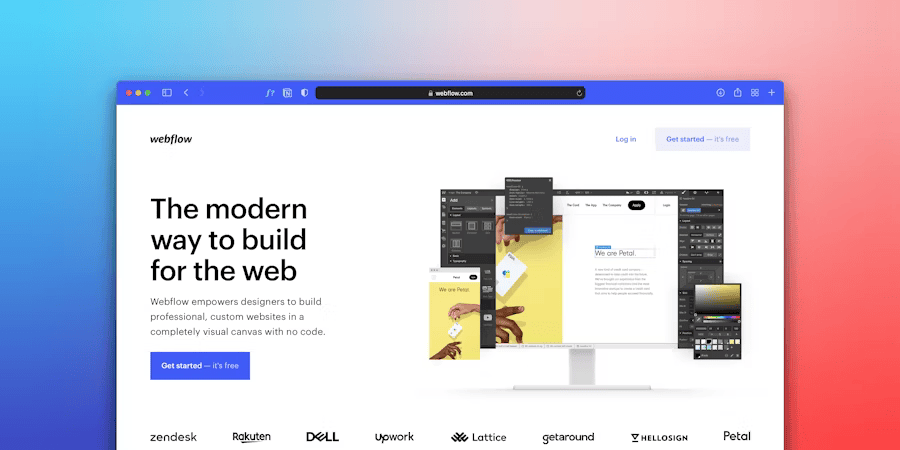
Webflow now hosts websites in the EU as well. On Tuesday, 17 November 2026, Webflow launched EU Hosting. A site's data is now stored in data centres in Ireland and Frankfurt instead of the US. For everyone working with Webflow in Germany, this is a milestone, including for us as a Webflow Premium Partner. 13 years after the company was founded, one of the most common objections to Webflow and the GDPR is gone.
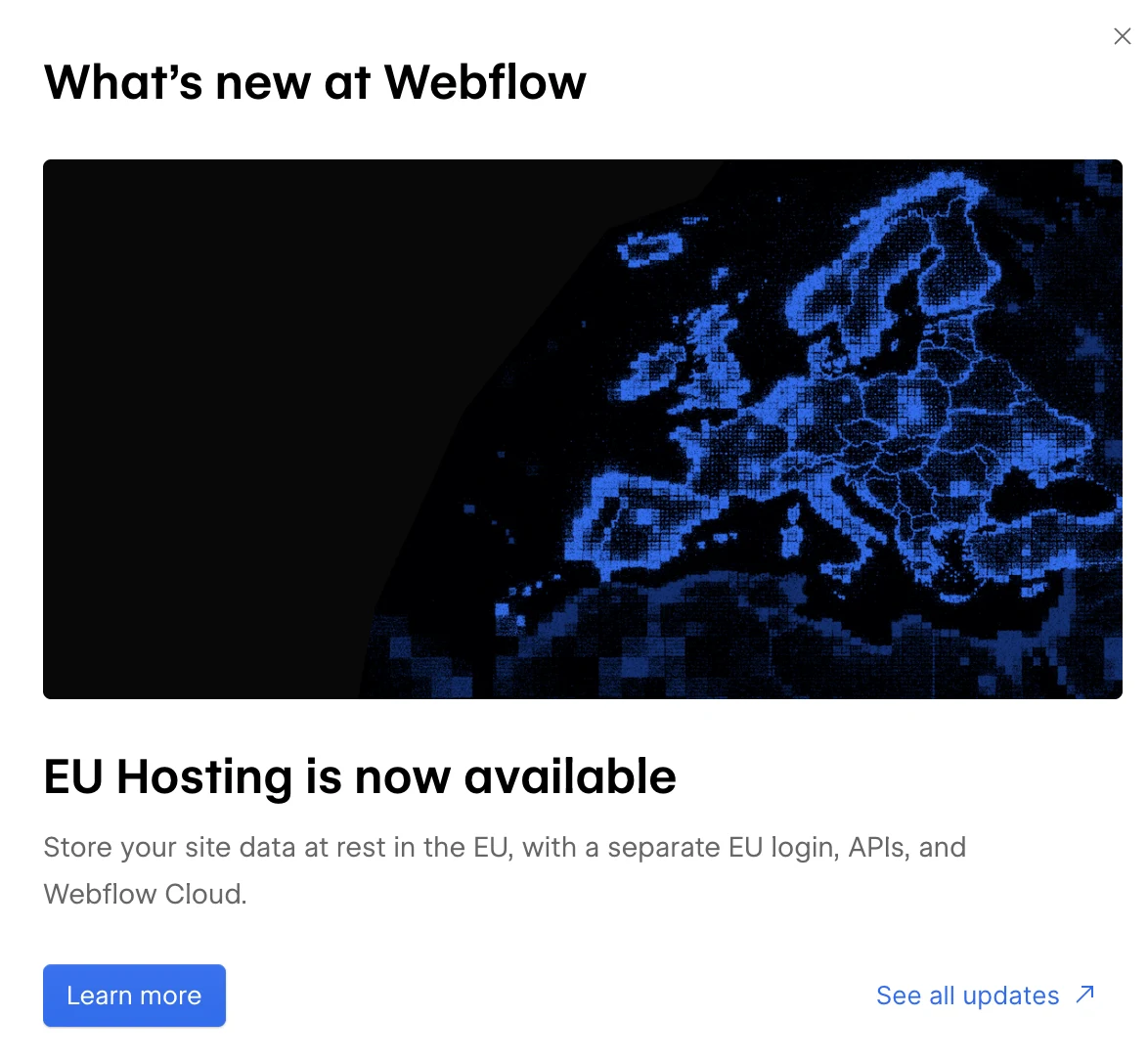
It is not quite that simple, though. EU Hosting is only available on specific Enterprise plans, some features are missing, and Webflow itself says that not all data stays in the EU. We show what exactly was announced, what it means for data protection and who should consider the switch. On 18 November, Webflow also showed the announcement directly in the dashboard:
Webflow EU Hosting at a glance
- Launch: Tuesday, 17 November 2026.
- Location: Amazon Web Services in Ireland as the primary region, Frankfurt for failover and backups.
- Stored in the EU:CMS, images and files, form submissions, backups, translations with Localize and Ecommerce.
- Not included: Analyze, Optimize, Campaigns, AEO and the Marketplace with Apps.
- Who can use it: only specific Enterprise plans. Webflow migrates existing sites case by case.
- Access: a separate login at eu.webflow.com, separate APIs and a separate MCP server.
What Webflow actually announced
Until now, Webflow hosting ran in the US by default. EU Hosting is not a setting you switch on in a project. According to Webflow, the site runs on a separate deployment in the EU, with its own databases, its own backups and its own login. This includes the Designer, publishing, the APIs, the MCP server for AI tools and Webflow Cloud for your own web apps. Site activity logs and a dashboard for bandwidth usage are also part of it.
According to Webflow's documentation, EU Hosting runs on Amazon Web Services infrastructure in 2 regions. Ireland (eu-west-1) is the primary region for hosting and data. Frankfurt (eu-central-1) takes over if Ireland fails and stores the backups. EU Hosting is available to eligible Enterprise customers regardless of where the company is based. Webflow does not publish a price.
What works with EU Hosting and what does not
The list of exceptions matters more to marketing teams than it seems at first glance:
| Area | With EU Hosting | What it means |
|---|---|---|
| CMS, images, forms | in the EU | Content and form submissions are stored in Ireland |
| Localize and Ecommerce | in the EU | Multilingual sites and shops are possible |
| APIs, MCP, Webflow Cloud | separate EU version | Integrations need the EU endpoints |
| Analyze and Optimize | not available | Analytics and A/B tests with other tools |
| Campaigns and AEO | not available | Webflow's own features for campaigns and AI search are missing |
| Marketplace and Apps | not available | Extensions from the Marketplace cannot be installed |
| Business and payment data | not in the EU | Contract and payment data are not covered |
The missing Apps in particular affect many projects. If you connect tools through the Marketplace today, for example for forms, translations or a CRM, check whether there is another way before you move.
Does the data really stay in the EU?
No, not completely, and Webflow says so itself. EU Hosting defines where data is stored. Some data is still processed outside the EU:
- Delivery: A CDN caches copies of published pages worldwide so they load quickly everywhere. According to the list of subprocessors, that is Cloudflare.
- Service providers: For support and some features, Webflow uses companies that process data in the US, such as Zendesk and Salesforce.
- Access: According to the documentation, authorised people may access the data from outside the EU, for example for support and security.
There is one more point Webflow does not mention. Webflow, Inc. is based in San Francisco, and Amazon Web Services is a US company as well. The CLOUD Act requires US companies to give authorities access to data even if it is stored outside the US. EU Hosting changes where data is stored, not the legal situation of the provider. For a website with public content, that is rarely a problem. Anyone collecting sensitive data through forms, for example in healthcare, should take a closer look.
Is Webflow GDPR compliant?
Webflow can be run in a privacy-compliant way without EU Hosting too, if it is set up correctly. That was true before and still is. We are not a law firm, but we check these points in every Webflow project:
- Data processing agreement: Webflow provides a data processing agreement (DPA) that includes the EU Standard Contractual Clauses.
- Data transfers: According to its privacy policy, Webflow is certified under the EU-U.S. Data Privacy Framework. The framework is in force, but a challenge against it is pending at the Court of Justice of the EU (case C-703/25 P).
- Consent: Analytics, advertising and embedded content such as YouTube only load after consent. A cookie banner alone is not enough if it does not block anything.
- Fonts: Upload fonts to Webflow instead of loading them live from Google Fonts.
- Privacy policy: It names Webflow as the host, the transfer to the US and the legal basis.
If the Data Privacy Framework falls in court, EU Hosting becomes much more important. Websites with data in the EU would then be in a better position than those relying on the framework.
Who should consider EU Hosting
EU Hosting is mainly interesting for organisations with fixed requirements on data location: authorities and public institutions, hospitals and medical groups, banks and insurers, corporations with their own data protection policies and anyone bidding in tenders that require EU storage. Until now, Webflow was often ruled out for these customers in the first round.
For most mid-sized companies, nothing changes for now. They are not on an Enterprise plan, and a properly configured website on standard hosting remains the usual route. If you are considering Enterprise anyway, raise EU Hosting with Webflow before the site goes live. According to Webflow, moving later is only possible case by case.
Our take
For us as a Webflow agency and Webflow Premium Partner, this is the most important infrastructure news of the year. In conversations with companies in Germany, the question about server location comes up regularly, and until now the honest answer was: the US, secured through contracts and a framework agreement. Now there is a real alternative for the first time.

At the same time, it is a start. The Enterprise requirement, missing Apps and no Webflow marketing tools make EU Hosting an offer for large customers today. We hope it will reach the regular site plans in the medium term. Until then: a Webflow website is not a privacy risk if consent, contracts and embedded services are right. Why Webflow is not affected by vulnerabilities like PHP2Shell in the first place is explained in a separate article. How Webflow performs overall is covered in our comparisons Webflow vs. WordPress and Framer vs. Webflow.
If you want to know whether your Webflow website is set up properly for data protection or whether EU Hosting is worth it for you, get in touch. What we have already built with Webflow is shown on our experience page.
FAQ
Is Webflow GDPR compliant?
Webflow can be run in a privacy-compliant way if it is set up correctly: a data processing agreement with Webflow, consent before analytics, advertising and embedded content, uploaded fonts and a privacy policy that names Webflow as the host. Webflow is certified under the EU-U.S. Data Privacy Framework. With EU Hosting, the data is also stored in the EU.
How much does Webflow EU Hosting cost?
Webflow does not publish a price. EU Hosting is only available on specific Enterprise plans that Webflow quotes individually. Interested companies contact Webflow sales or their account team.
Can I move my existing Webflow website to the EU?
Only as an Enterprise customer and only case by case. Webflow reviews and handles the migration of a Workspace itself. Afterwards you sign in at eu.webflow.com with a separate login. Marketplace Apps do not work there, so clarify this beforehand.
Does all data stay in the EU with EU Hosting?
No. CMS content, images, form submissions and backups are stored in Ireland and Frankfurt. However, a CDN caches copies of the pages worldwide, some service providers process data in the US, and authorised people may access the data from outside the EU. Webflow is also a US company and subject to the CLOUD Act.