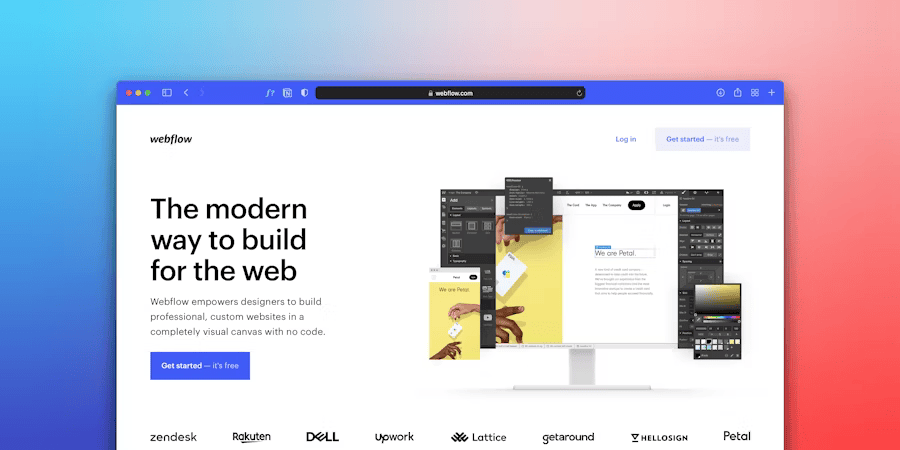
Webflow websites for companies: Is it worth it in 2026?
Anyone planning a new corporate website today rarely has a design problem. The real issue runs deeper: the site looks decent and might even get visitors, but it generates too few inquiries. This is exactly why the topic of Webflow websites for businesses is so relevant right now. It is not about a prettier CMS. It is about whether your website finally functions as a sales asset instead of just being a digital brochure.
For many companies, this is the turning point. They have already invested money in SEO, ads, or social media, but the website is holding everything back. It is too slow, too inflexible, too technically dependent, and too weak in terms of conversion. Webflow can solve this—but not automatically. The system is powerful, but the decisive factor is how it is strategically deployed.
Why a Webflow website is particularly interesting for businesses
Webflow strikes a chord because it addresses two problems at once: slow development processes and rigid marketing pages. Traditional websites often fail not because they are incapable, but because every minor change becomes a mini-project. A new landing page, a modified service page, a CTA adjustment, or SEO optimization in the content—suddenly, marketing, sales, and management are all dependent on developer availability.
With Webflow, this dependency can be significantly reduced. Content, layouts, and page structures can be built cleanly so that marketing teams or internal stakeholders can implement many changes themselves much faster. This not only saves time; it increases market responsiveness. If you are testing campaigns, communicating new services, or expanding locations, you do not need a website that slows down every adjustment.
The second point is technical quality. Webflow provides a solid foundation for performance, clean code, and structured page creation. This is particularly relevant if your website is intended not just to inform, but to rank on Google and turn visitors into leads. A strong technical foundation does not replace a strategy, but without it, every growth initiative becomes unnecessarily expensive.
Where Webflow really makes a difference for businesses
The biggest advantage is not in the editor. The biggest advantage is that Webflow can bring design, content structure, and conversion much closer together than many legacy system landscapes. This is exciting for companies that do not want to coordinate ten different tools only to end up with mediocre results.
When a site is designed cleanly in Webflow, brand presence, user guidance, and lead generation can be built in alignment. This is evident, for example, in law firms, medical practices, B2B service providers, or consultancies. These companies do not need gimmicks. They need trust, clarity, and a clear path from the first website visit to a concrete inquiry.
This is exactly where Webflow plays to its strengths. Service pages can be structured so that they not only look good but also address search intent, handle objections, and lead directly to contact. Landing pages for campaigns can be created and tested faster. Content can be scaled cleanly when multiple services, industries, or locations need to be represented.
This is a real difference compared to websites that are technically online but barely function as an acquisition channel in practice.
Webflow is no magic bullet
Too much is often promised here. A Webflow website for businesses is not an automatic lead machine. Anyone who simply switches systems without revising their positioning, offer logic, and conversion paths will end up with nothing more than a more modern version of the old problem.
The most common misconception is: new CMS equals better results. In practice, this is only partially true. If your message is unclear, your pages do not answer purchase-relevant questions, and your contact methods are too non-committal, Webflow will not save you.
Also, SEO does not happen by itself. Webflow offers good technical prerequisites, but rankings come from the right information architecture, search-intelligent content, clean internal structure, and consistent optimization. Anyone who ignores this is confusing tool quality with marketing impact.
Equally important: not every company needs the same setup. A local service provider focusing on regional inquiries has different requirements than a B2B provider with a complex offering and a longer decision-making phase. Therefore, the crucial question is not whether Webflow is modern. The crucial question is whether the website is planned as a component of your business model.
When Webflow is particularly worthwhile
Webflow is especially worthwhile if your website is intended to be continuously developed. This means not just going live once and leaving it untouched for two years, but improving it constantly. New landing pages, new service pages, content expansion, campaign integrations, conversion tests, recruiting pages, or regional expansions—it is in this environment that its cost-effectiveness becomes apparent.
Webflow is particularly strong for companies that want three things at once: a high-quality brand presence, fast operational implementation, and measurable performance. This combination is the real bottleneck in many website projects. Either it ends up beautiful but slow, functional but generic, or technically clean but without any sales impact.
Mit einer klaren Strategie lässt sich das deutlich besser zusammenführen. Deshalb setzen wachstumsorientierte Unternehmen zunehmend auf Systeme, die nicht nur verwaltet, sondern aktiv als Marketing- und Vertriebsinfrastruktur genutzt werden.
Die typischen Fehler bei einer Webflow Website für Unternehmen
Viele Projekte scheitern nicht am System, sondern an der Herangehensweise. Der erste Fehler ist, Webflow wie ein reines Designtool zu behandeln. Dann entsteht eine optisch starke Website, die inhaltlich zu dünn bleibt. Das sieht modern aus, verkauft aber nicht.
Der zweite Fehler ist fehlende Priorisierung. Unternehmen packen alles auf die Startseite, erklären jede Nebenleistung im gleichen Gewicht und wundern sich dann über schwache Conversion Rates. Gute Websites führen. Sie sortieren Informationen nach Relevanz und bauen Vertrauen in der richtigen Reihenfolge auf.
Der dritte Fehler ist der Bruch zwischen Traffic und Zielseite. Ads verweisen auf allgemeine Seiten, SEO-Inhalte enden ohne klare Handlungsaufforderung, Formulare fragen zu viel oder zu wenig ab. Das Ergebnis: Besucher sind da, Anfragen bleiben aus oder die Lead-Qualität ist schlecht.
Der vierte Fehler betrifft Zuständigkeiten. Wenn Design, SEO, Copywriting und Conversion-Logik getrennt gedacht werden, entsteht fast immer Reibung. Genau deshalb liefern viele Websites zwar Reports, aber keinen echten Umsatzbeitrag. Eine Website performt nur dann, wenn Struktur, Botschaft und technische Umsetzung gemeinsam auf Resultate ausgelegt sind.
Worauf Entscheider bei der Umsetzung achten sollten
Wenn Sie eine neue Website planen, sollten Sie nicht zuerst über Farben oder Animationen sprechen. Beginnen Sie mit den geschäftlichen Zielen. Welche Anfragen wollen Sie mehr? Welche Leistungen sind besonders profitabel? Welche Zielgruppen sollen angesprochen werden? Wo springen Interessenten aktuell ab?
Danach kommt die Seitenarchitektur. Eine gute Unternehmenswebsite braucht keine Informationsmasse, sondern Priorität. Welche Seiten haben Ranking-Potenzial? Welche Seiten sollen direkt konvertieren? Wo braucht es Vertrauenselemente wie Cases, Bewertungen oder Prozessdarstellungen? Erst wenn diese Fragen geklärt sind, ergibt Design wirklich Sinn.
Auch das Thema Pflege sollte ehrlich bewertet werden. Webflow ist stark, wenn Inhalte aktiv weiterentwickelt werden. Wenn intern niemand Verantwortung übernimmt oder die Website nach dem Launch wieder liegen bleibt, wird Potenzial verschenkt. Das System macht Geschwindigkeit möglich - nutzen muss man sie trotzdem.
Für viele Unternehmen ist deshalb ein Setup sinnvoll, bei dem Strategie, Aufbau, SEO und Conversion von Anfang an verzahnt geplant werden. Genau dort trennt sich eine schöne Website von einem messbaren Akquisekanal. marketer UX verfolgt diesen Ansatz bewusst, weil Websites ohne Performance-Logik für wachsende Unternehmen meist nur eine teure Zwischenlösung bleiben.
Das eigentliche Entscheidungskriterium
Die Frage ist nicht nur, ob Webflow technisch passt. Die wichtigere Frage lautet: Soll Ihre Website in den nächsten 12 bis 24 Monaten aktiv neue Kunden gewinnen oder einfach nur präsentabel sein?
Wenn Sie eine Website wollen, die Vertrauen aufbaut, in Google Sichtbarkeit gewinnt, Kampagnen unterstützt und qualifizierte Anfragen systematisch erhöht, ist Webflow ein sehr starkes Fundament. Wenn Sie nur eine digitale Visitenkarte brauchen, gibt es auch einfachere Wege.
Für ambitionierte Unternehmen ist die Website längst kein Nebenprojekt mehr. Sie ist Teil des Vertriebs. Und sobald man sie auch so behandelt, verändert sich die gesamte Bewertung: Design ist dann nicht Geschmackssache, sondern Conversion-Faktor. Technik ist nicht Backend-Thema, sondern Wachstumshebel. Content ist nicht Füllmaterial, sondern Verkaufsargument.
Genau deshalb lohnt sich die Webflow-Frage nicht auf Systemebene, sondern auf Ergebnisebene. Die bessere Website ist nicht die mit mehr Effekten. Es ist die, die mehr aus Ihrem bestehenden Traffic macht und aus Aufmerksamkeit verlässliche Anfragen erzeugt.
Wer das ernst meint, sollte seine nächste Website nicht danach auswählen, wie schnell sie online geht, sondern danach, wie klar sie auf Umsatz, Leads und Wachstum einzahlt.